

Trauma Focused
Interventions
At Shining Gems Child Therapy, creative and trauma informed approaches support children to express their feelings, make sense of their experiences and restore a sesnse of safety and confidence.
Trauma Focused CBT
(TF-CBT)
TF-CBT stands for trauma focused cognitive behavioural therapy. If you or your child would like to know more then please visit the UK Trauma Council’s video below.
The UK Trauma Council’s work is licensed under the Creative Commons Attribution-NonCommercial-NoDerivs 3.0 License.
Post Traumatic Stress Disorder
(PTSD)
If you or your child want to know more about PTSD and the symptoms of PTSD please use the information and links below.
PTSD core criteria for diagnosis according to the ICD-11 (World Health Organisation diagnostic tool) are as follows:
- Re-experiencing: Persistent remembering, "reliving" the trauma through intrusive flashbacks, vivid memories, or recurring dreams.
- Avoidance: Actively avoiding circumstances that resemble the traumatic event.
- Negative alterations in cognition and mood: This can include difficulty recalling aspects of the event, or negative feelings.
- Increased arousal and reactivity: Symptoms like difficulty sleeping, irritability, difficulty concentrating, hypervigilance, or an exaggerated startle response. Paranoia or avoidance of anything related to the event such as places, talking about it, seeing or hearing anything related to the event or people involved.
For further information and a helpful child friendly video explaining the impact and symptoms of PTSD please click the link below and/or watch the video provided by the UK Trauma Council®. There is also a video to help children with any feelings of avoidance they may be experiencing.
https://uktraumacouncil.org/resources/trauma-and-ptsd
The UK Trauma Council’s work is licensed under the Creative Commons Attribution-NonCommercial-NoDerivs 3.0 License.
More information and resources can be found on our Resources Page.
Trauma Informed Stabilisations Treatment (TIST) for Children
What is TIST?
TIST is a child-friendly therapeutic model formulated by Karen Andor. TIST for children is adapted from Janina Fisher’s original TIST framework that supports working with dissociative parts in trauma therapy. Dissociation can often be a side effect of unresolved developmental trauma or complex PTSD.
Understanding Parts Work
Parts work is based on the concept that within each person, there are subpersonalities that interact with one another. When the tendencies, needs, and drives of these different parts clash, psychological problems can occur.
Parts work aims to help people resolve these inner conflicts and aid self-acceptance and self-compassion. These subpersonalities are called ‘parts’ because each has its own feelings and needs and also develops certain habits and roles over time. In trauma these parts would have often served the child as a protective or survival strategy.
How It Helps
TIST is about educating the child about their parts and how to regulate these, alongside a parent or carer. This therapeutic model goes well with other attachment focused therapies such as Theraplay® and DDP® and parent-child dyadic work.
TIST is often used for children and young people displaying highly challenging and dissociative behaviours and is not generally used as a therapeutic intervention on its own.
TIST can be used alongside Theraplay® based work whilst the child and carer are engaged with this, or before the child is directly involved in the DPP process, following the initial parent/carer work.
During therapy the child or young person is taught about their different parts using the “Diddy doll”, a doll specifically designed by Karen Andor for use with TIST, to support with child friendly psychoeducation on parts work (see below).
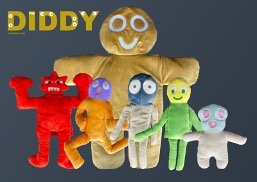
Trauma and dissociation are complex and can look different for everyone. However as Karen Andor (2024) explains,
“We have to remember that trauma is stored in the body – not in the prefrontal cortex – so we can’t process it through talking. On top of that, kids don’t even have a well-developed prefrontal cortex, so you can see how difficult it is for them to process trauma. So what do kids do? They act out. Challenging behaviors are the most common form of dissociation in children.”
References
Ogden, T. (1983). The concept of internal object relations. The International Journal of Psycho-Analysis, 64, 227.
Schwartz, R. (1987). Our multiple selves: Applying systems thinking to the inner family. Family therapy networker, 11(2), 24-31.
Rowan, J. (2009). Personification: Using the dialogical self in psychotherapy and counselling. Routledge.
If you would like to learn more about how therapy works with us, you can explore our What to Expect guide, which walks you through the process step-by-step. You can also visit our Resources Page, where you’ll find supportive tools, articles, and helpful links.
You can also explore the other interventions available here:
Children’s Accelerated Trauma Technique (CATTT)
Dyadic Developmental Psychotherapy (DDP®)
Or send us a message using our Contact Page.